
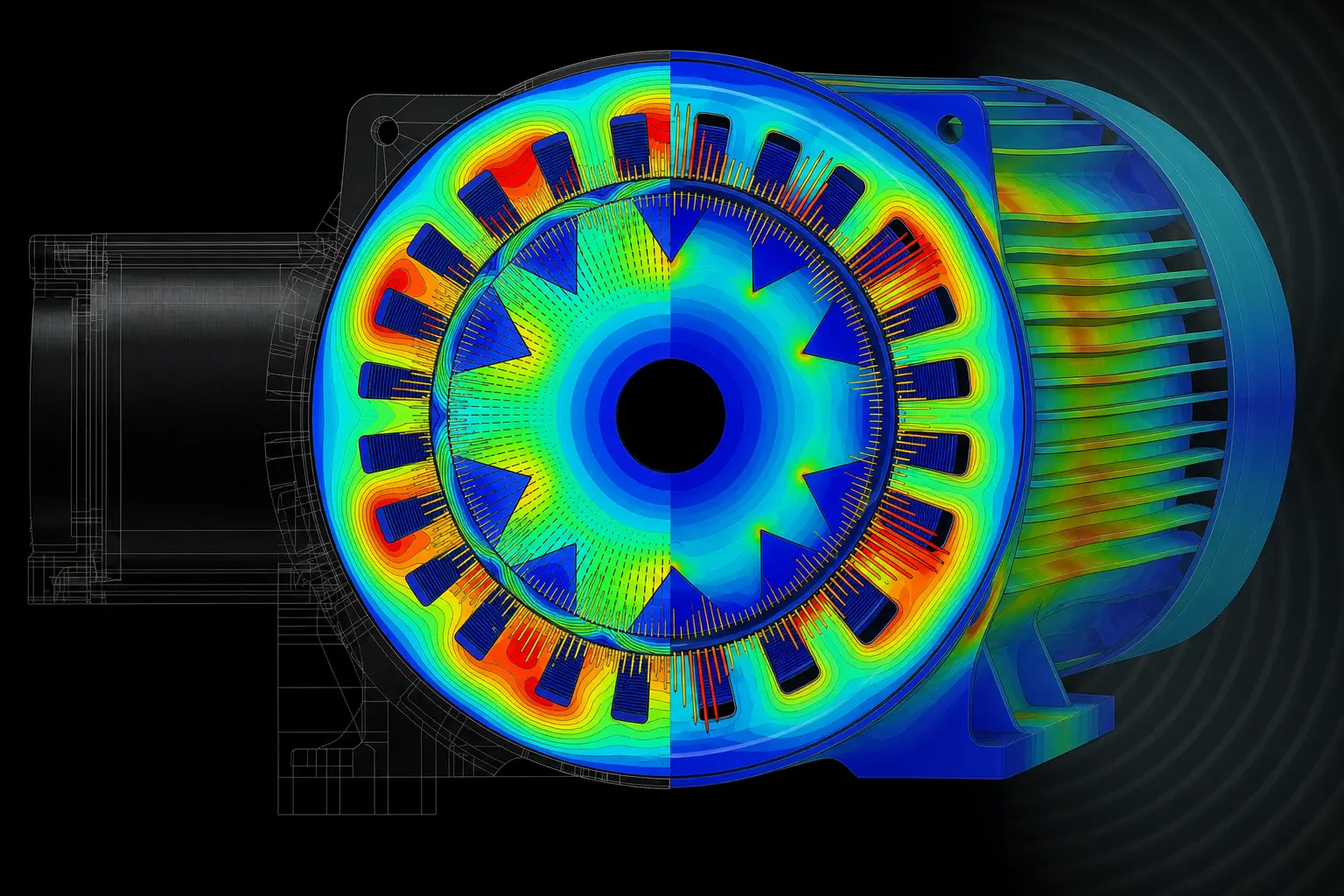
Every design review suggested the motor was ready. The efficiency map looked clean, thermal margins were within target, and cogging torque met expectations on paper. Then the prototype went into the vehicle, and testing revealed a noticeable whine around 4,500 rpm that had never appeared during earlier evaluations. Sign-off slipped, tooling could no longer be frozen, and the programme entered an unexpected redesign cycle with additional cost and schedule impact.
At this stage, the issue is no longer just acoustic refinement. It can affect prototype rework, tooling release, programme timing, and customer confidence.
This scenario is not simply an isolated design error. More often, it reflects a workflow gap in how electric motor development programmes are structured.
Two Teams, One Motor, No Shared Model
In many organisations, the engineer responsible for creating the electromagnetic design is not the same engineer responsible for validating vehicle noise. The EMag engineer focuses on torque, efficiency, and power density, while the NVH engineer evaluates vibration and acoustic performance after hardware becomes available. Without a shared simulation workflow, electromagnetic force harmonics are rarely assessed against structural behaviour early in development.
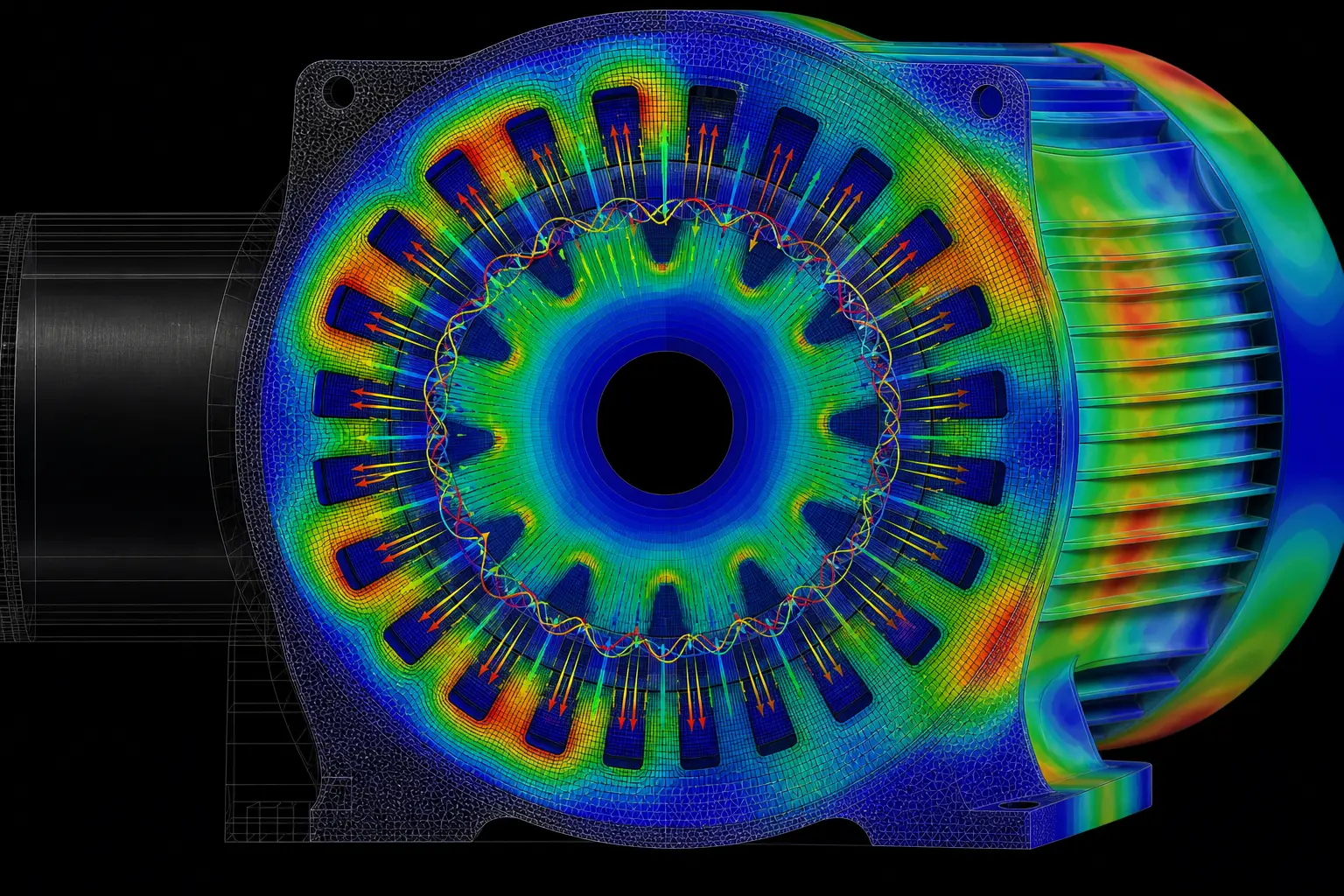
By the time this information is exchanged through physical testing rather than simulation, design changes such as rotor skew adjustments, slot modifications, or tooling updates become significantly more expensive.
What's Actually Driving the Noise
Radial electromagnetic force harmonics generated across the air gap excite the stator at specific spatial and temporal orders as motor speed increases. When one of these force orders aligns with a structural resonance of the stator-housing assembly, the result is a distinct tonal motor whine. Because this behaviour depends on the interaction between electromagnetic excitation and structural dynamics, it cannot be identified reliably through efficiency or torque-ripple data alone.
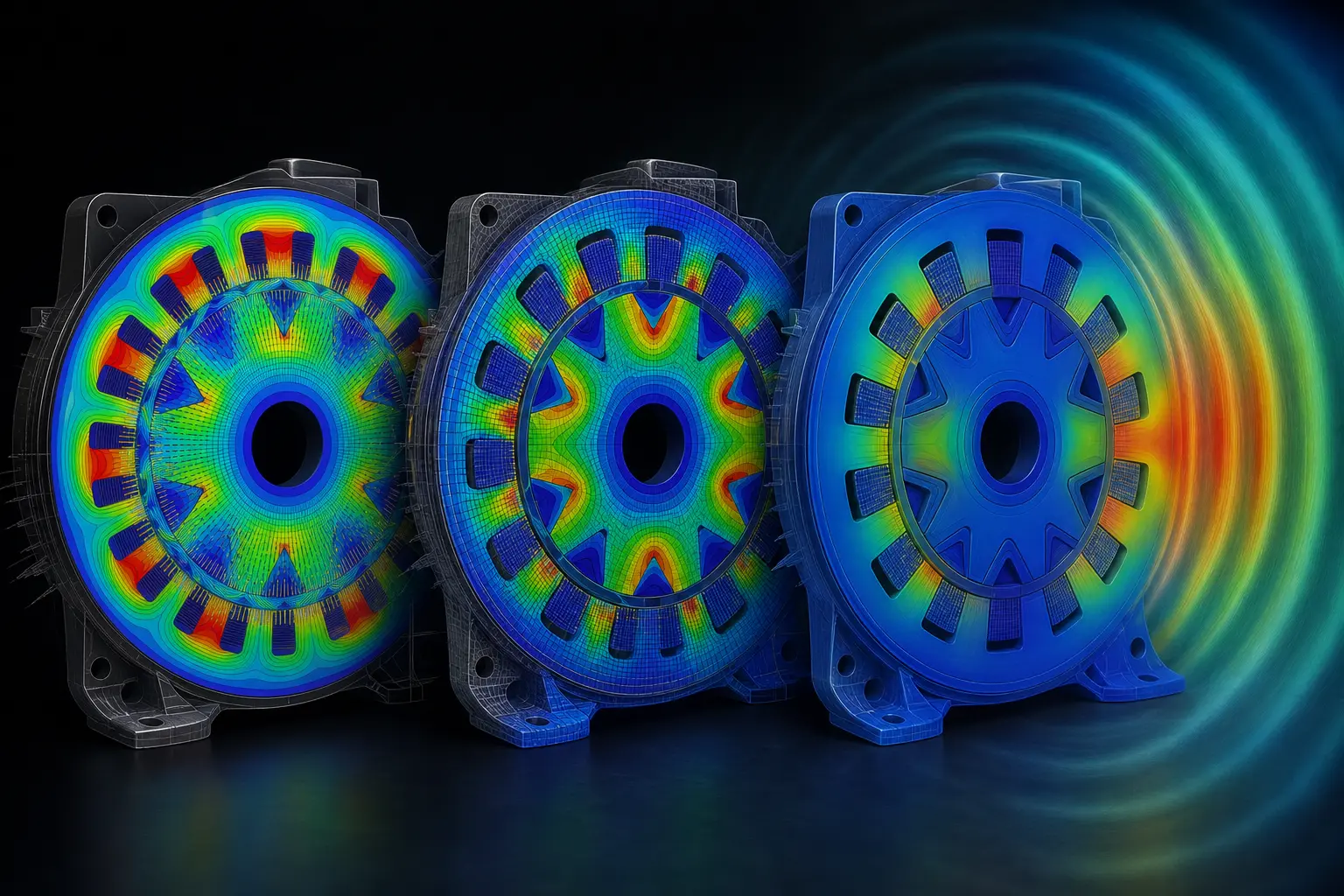
Catching It Before Metal Gets Cut
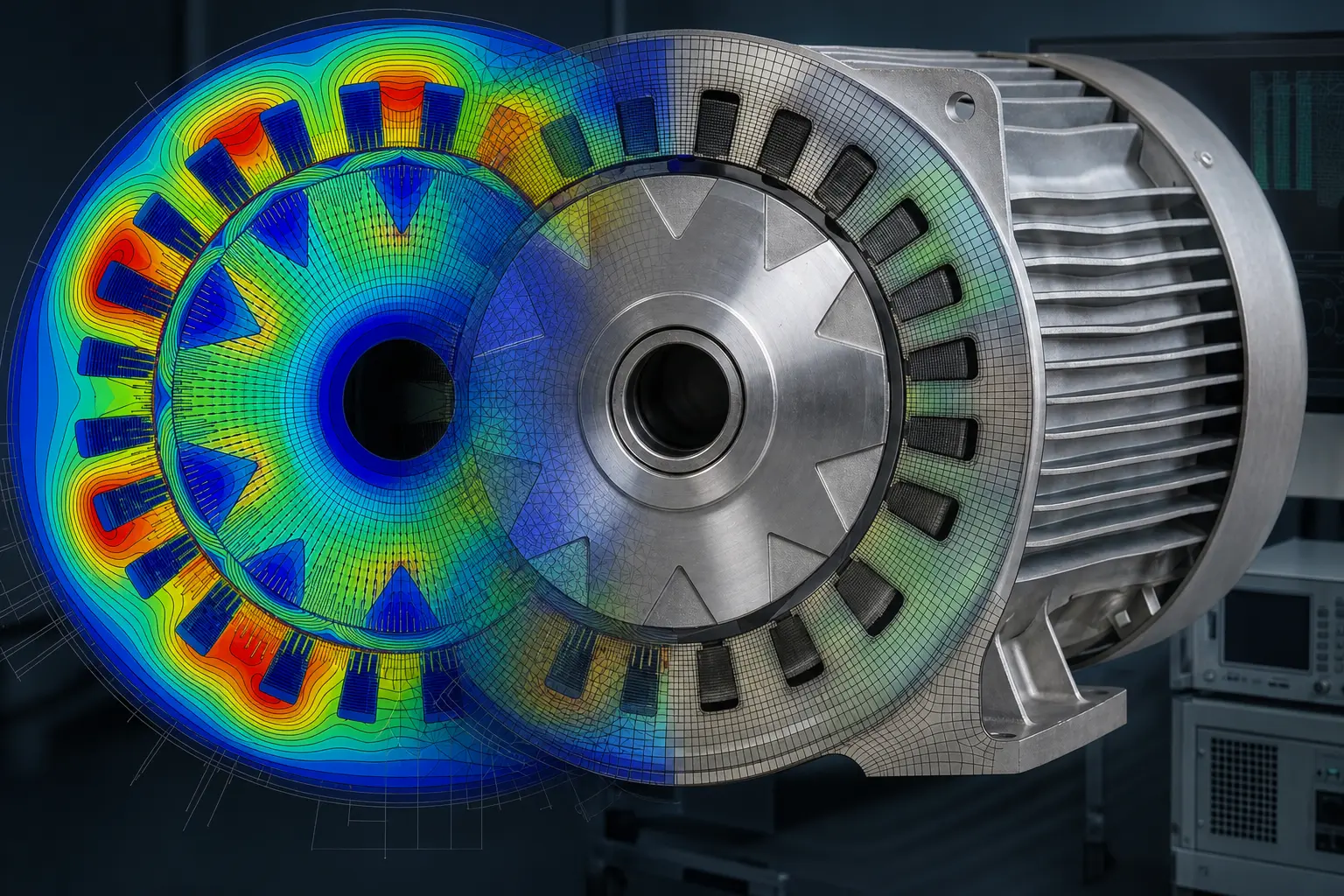
A coupled simulation workflow allows electromagnetic force harmonics to be transferred directly into structural and acoustic analyses. Engineers can predict sound pressure levels throughout the operating speed range before manufacturing a prototype, making it possible to evaluate design options such as rotor skew, slot combinations, or stator lamination changes while modifications are still inexpensive.
A Quick Pre-Build Checklist
- A force-harmonic order map (magnitude vs. order vs. RPM) for the finalized topology.
- A structural modal analysis of the stator-housing assembly correlated with the dominant force orders.
- A predicted sound pressure level curve across the complete operating speed range, not only at rated speed.
- Joint sign-off from both EMag and NVH teams using the same simulation model rather than independent reports.
If your team cannot generate these outputs before the first prototype, the limitation is usually not engineering capability—it is the absence of an integrated simulation workflow. Closing that gap early can reduce costly prototype iterations and improve confidence before production tooling is released.
Before releasing the next motor design to prototype, ask whether your current workflow can predict which electromagnetic force orders may become audible in the vehicle. If it cannot, the NVH risk is still being discovered too late.
Can Your Workflow Predict Motor NVH Before the First Prototype?
Kaizenat's CAE engineers help NVH and EMag teams implement coupled force-harmonic simulation — connecting electromagnetic excitation, structural response, and acoustic prediction in a single workflow before metal gets cut.